Salt Stops Working When It Gets Cold
Rock salt is the default around here, and for most of a Michigan winter it does the job. On the coldest mornings it does close to nothing, and putting down more does not change that.
There is a temperature floor
Salt works by lowering the freezing point of water, but the effect runs out. Sodium chloride keeps working reasonably well down into the mid twenties. By the time pavement is near fifteen degrees it has slowed way down, and colder than that it is mostly just sitting there. If you spread salt at five degrees and nothing happens, the salt is not bad. It is too cold for it.
Below that, change the material
Calcium chloride and magnesium chloride stay active at much lower temperatures and pull moisture in rather than waiting for it. Sand does not melt anything at all, but it gives traction immediately, which is often what you actually need on a cold morning.
More is not better
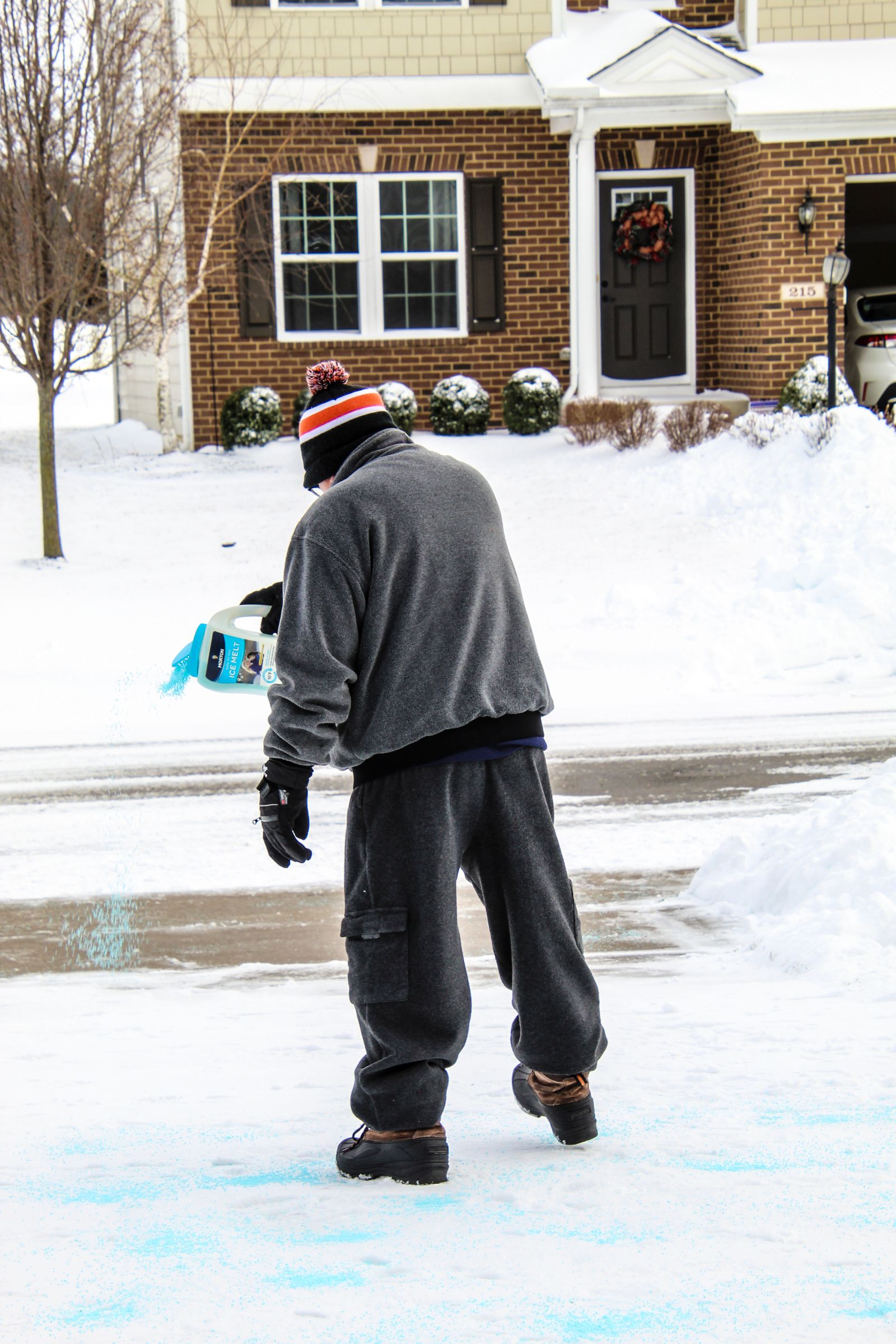
Salt spread thick does not melt faster. It runs off, burns the grass along the driveway edge, pits concrete, tracks into the house, and ends up in the drain. A thin even spread on a cleared surface does more than a heavy pile sitting on packed snow.
Plow first, then treat
Ice melt is for the last thin layer, not for eight inches of snow. Clear the surface down to the pavement, then treat whatever is left. Applying ahead of a storm, when conditions allow it, keeps the bottom layer from bonding in the first place and makes the clearing easier.
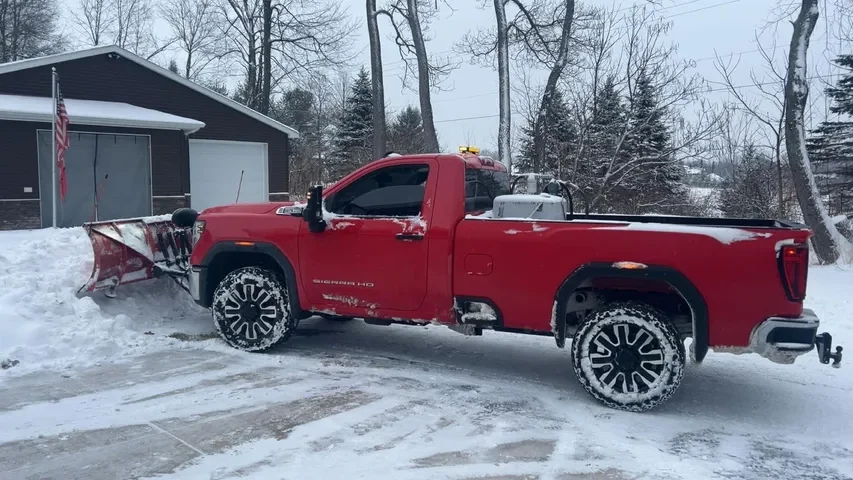
We handle plowing and ice management through the winter. Call or text JR at (517) 993-8393, or see snow removal.