Fall Is the Best Time to Fix a Thin Lawn
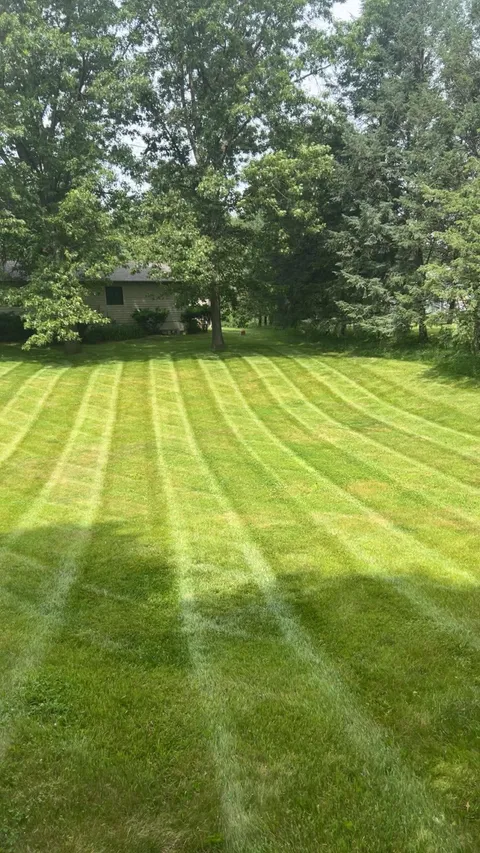
If your lawn thinned out this summer, the instinct is to seed it next spring. However, fall overseeding works better, and it is not close.
Why fall overseeding works in mid Michigan
Seed needs warm soil to germinate and cool air to establish. Late August into September in mid Michigan gives you both at once. The soil is still holding summer heat, the nights are cooling off, and rain generally comes back. New grass gets a full autumn to root before the ground freezes, then a whole spring on top of that. MSU Extension has more tips for seeding lawns in September.
Spring seeding, on the other hand, gets the opposite. Cold soil slows germination, and by the time the seedlings are up, crabgrass is competing with them and July heat is a few weeks out. Spring seedlings go into their first summer with almost no root system under them.
Seed to soil contact is the whole game
Seed thrown on top of thatch does not grow. It has to reach dirt. In practice, that means raking the area open, core aerating, or slice seeding, depending on how big the problem is. On a small bare patch, scratching the surface with a rake is enough. On a whole lawn that has thinned out, aeration followed by fall overseeding drops seed into the holes where it has soil on every side.
Keep it damp, not soaked
New seed needs the top half inch to stay moist until it germinates. That is a light watering once or twice a day for two or three weeks, not a deep soak. Then, once it is up and you have mowed it twice, back off to normal watering.
Fix the reason it thinned
Keep in mind that seed does not solve shade, compaction, or a drainage problem. If the same patch fails every year, something underneath is causing it, and new seed will die the same way the old grass did.
Fall overseeding and lawn repair are part of our landscaping services. Call or text JR at (517) 993-8393.