Leaves Left on the Lawn Cost You in Spring
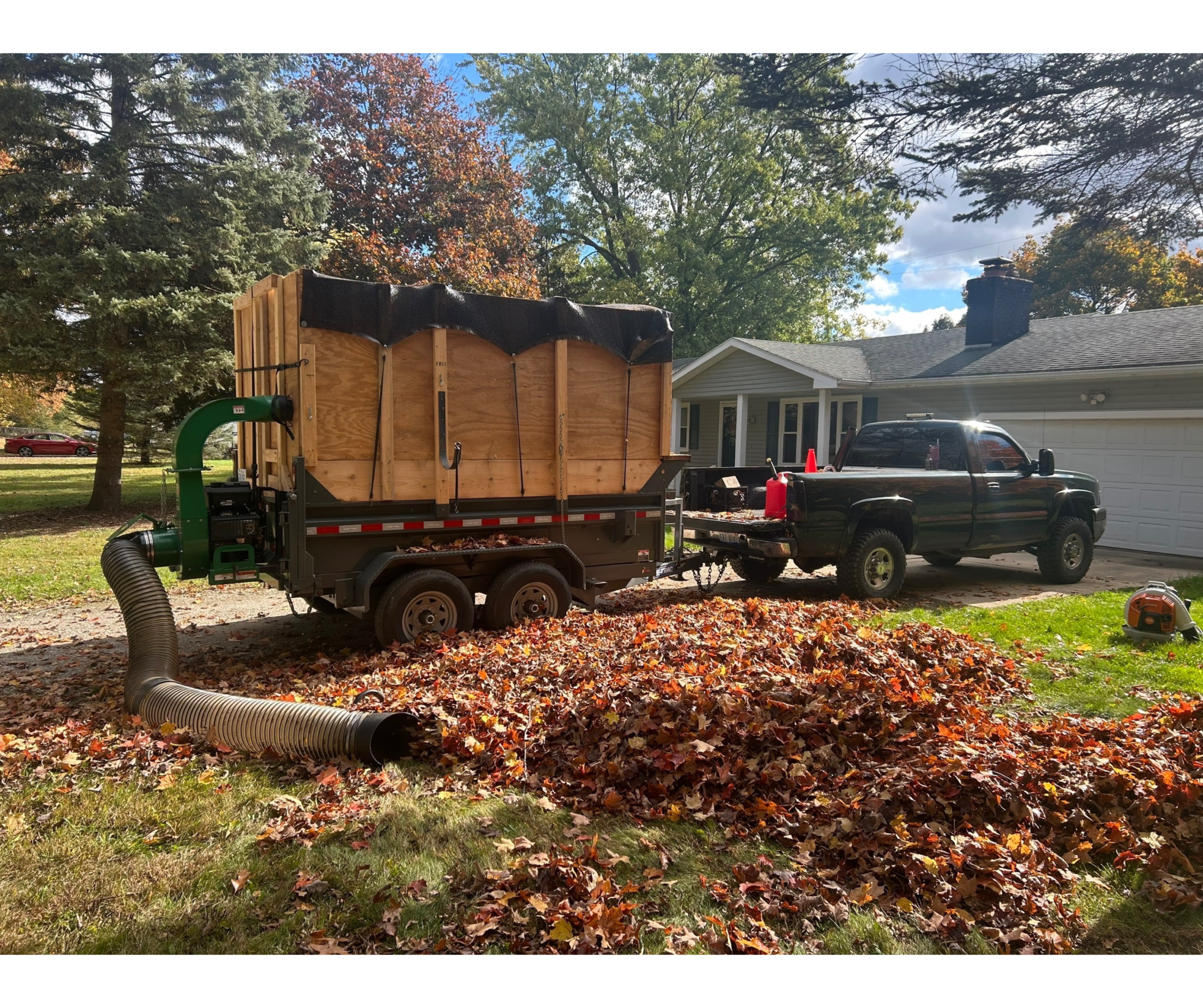
Leaves look harmless sitting on a lawn. The damage they do happens under snow, months later, when nobody is looking at it.
What actually happens
A wet leaf layer packs down flat and cuts off light and air to the grass underneath. Then snow lands on top and holds it there for four months. Under that cover the turf stays dark, damp, and just above freezing, which is exactly the condition snow mold wants. Come April you pull the leaves back and find grey matted circles where a lawn used to be.
Thick leaf cover also smothers the crowns outright, and it makes easy winter habitat for voles, which chew runs through the turf where you cannot see them.
Mulching works, up to a point
A light scatter of leaves can go right back into the lawn with a mulching mower. Chopped fine, they break down over winter and feed the soil. That works when you can still see grass through the leaves after a pass or two. Once the layer is thick enough that mowing just moves it around, it needs to come off the property.
Two passes beat one
Waiting for every last leaf to drop means dealing with a heavy wet mat, usually after the first rain has glued it down. One cleanup partway through the drop and one after everything is down is less work overall and does more good, because the lawn is never covered for long.
Do not skip the beds and gutters
Leaves piled against foundations and in bed corners hold moisture all winter. Clogged gutters back water up under shingles and dump it along the foundation during the thaw. Both are a lot cheaper to handle in November than to repair in March.
Fall cleanups are part of what we do around Laingsburg. Call or text JR at (517) 993-8393, or read about landscaping.